

Stair Carpet
STAIR CARPET IN Highlands Ranch, CO.
Stairs absorb more foot traffic per square foot than any other surface in a house. Quality Carpet Installations installs and repairs stair carpet across Highlands Ranch, CO, and Lone Tree, wrapping treads waterfall or cap and band, with pattern kept square on every riser, 30 years of stair work behind it, and free written estimates arranged on our contact page.
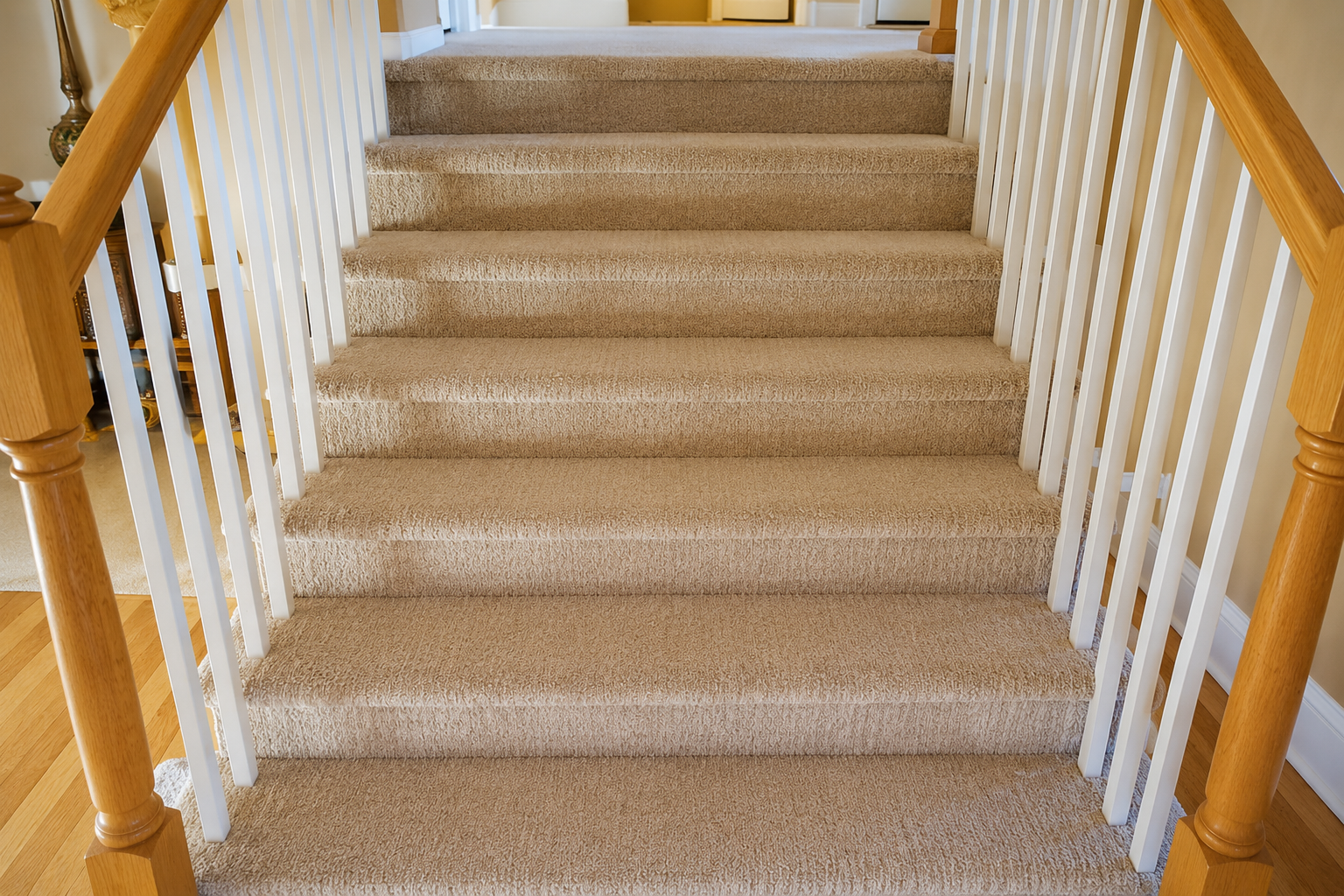
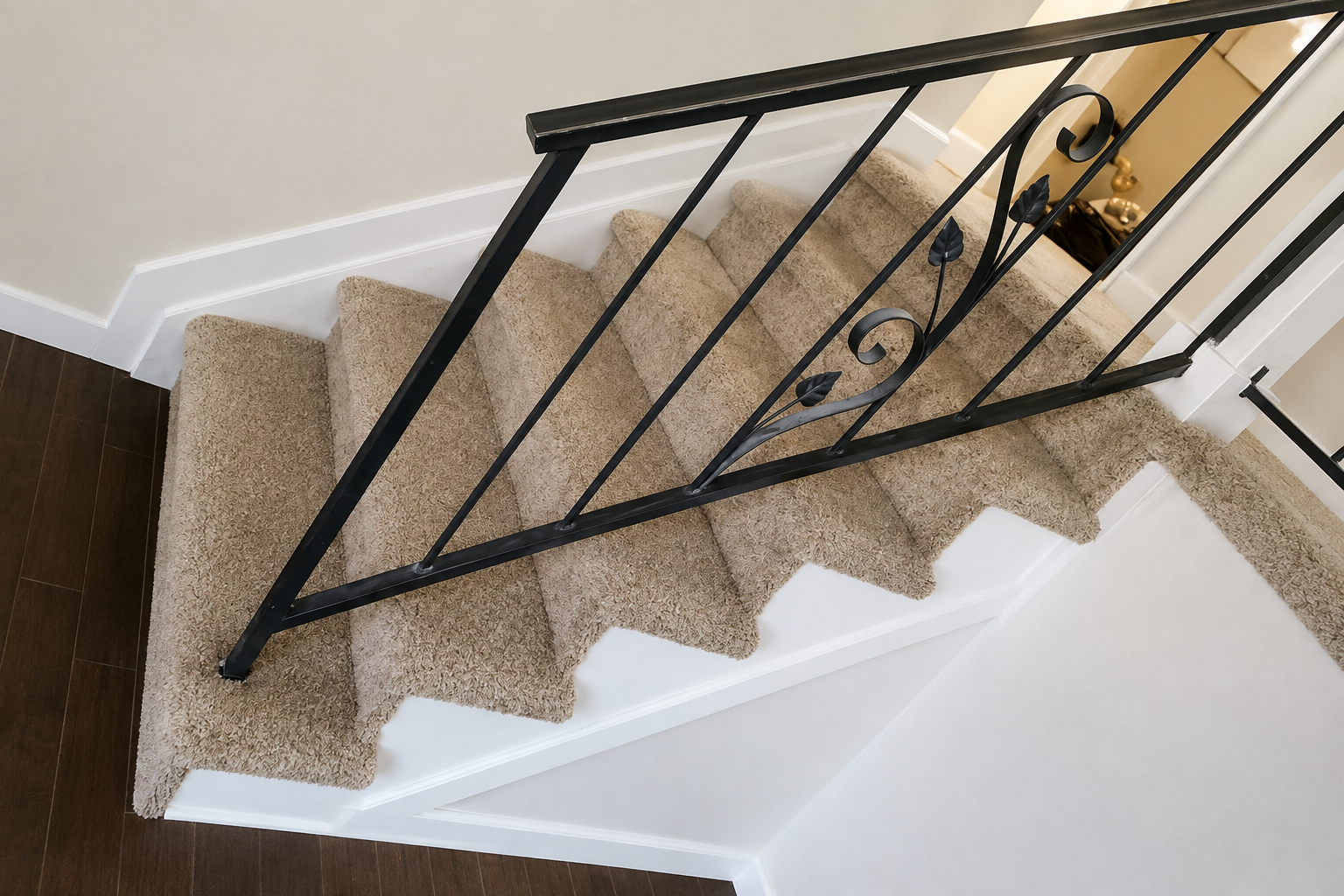
LOOSE TREADS ARE NEVER JUST A COSMETIC PROBLEM.
Loose stair carpet is the one flooring fault that can actually hurt somebody. A tread that shifts, a bullnose that has gone soft, an edge lifting at the wall stringer: each one is a foot placed on something that is not where it appeared to be. Stairs are also the hardest surface in the house to fake, because every error repeats itself on the next step.
So we treat a staircase as joinery rather than flooring. Each tread is fastened individually, each riser is pulled tight, and the pattern is squared step by step.
- Every tread fastened and anchored separately
- Waterfall or cap and band wrapping
- Pattern kept square from top to bottom
- Runners, full wraps, and open sides
STAIR CARPET
YOUR STAIRCASE IS THE FIRST THING ANYONE SEES.
It is also the last thing most people plan. Carpet gets chosen for bedrooms and the family room, and the stairs get whatever is left over, which is exactly backward. A staircase sits in the sightline from the front door, takes the heaviest traffic in the house, and shows wear years before any bedroom does. Choosing a denser, tighter construction for those steps changes how the whole house reads and how long the floor lasts.
SPLIT LEVELS AND WALKOUTS KEEP US BUSY HERE.
The housing stock across Highlands Ranch, CO runs to split levels, walkout basements, and two-story homes with a turn at the landing. That means winder treads, open sides, and awkward pie-shaped steps that no roll of carpet cuts neatly around. We template those individually rather than forcing a straight piece to bend, which is what leaves gaps at the nosing.
EVERY STAIRCASE HAS ITS OWN GEOMETRY.
No two sets of stairs measure identically, even in the same subdivision. Riser heights drift, nosings vary, and a landing is rarely square. Wrapping treads for 30 years means Quality Carpet Installations can read those differences before cutting, allow for them in the yardage, template the awkward ones properly, and finish the last step as cleanly as the first. Which staircase in your home is bothering you most?
WHAT CARPETED STAIRS DELIVER.
FOOTING YOU CAN TRUST
A carpeted tread grips the sole of a shoe or a sock in a way that polished wood never does. Descending in the dark stops being an act of faith, particularly for older family members.
A QUIETER TRIP UPSTAIRS
Hard treads broadcast every footstep through the framing of the house. Carpet and cushion absorb that impact, so late nights and early mornings stop announcing themselves to everyone still sleeping.
WOOD THAT STOPS TAKING DAMAGE
Bare treads collect scuffs, dents, and worn nosings that are expensive to refinish. A covered stair takes that punishment instead, protecting the timber underneath for whenever you want it exposed again.
A STAIRCASE THAT LOOKS DELIBERATE
Squared patterns, tight corners, and a consistent wrap read as intentional design rather than as leftover material used up. It is the detail visitors register without being able to name exactly what changed.
FEWER SLIPS FOR KIDS AND DOGS
Socks on hardwood and dogs taking the corner at speed are how stair accidents happen. A gripping surface slows both down and gives claws and small feet something to hold.
WEAR THAT SPREADS EVENLY
A properly tensioned wrap distributes traffic across the whole tread instead of concentrating it on the front edge. The steps age at one rate, so no single stair gives the set away.
WHAT WE WRAP
OUR STAIR CARPET WORK
Staircases come in more shapes than any other part of a flooring job. These are the configurations we handle regularly, from a straight basement flight to an open-sided run with a turn.
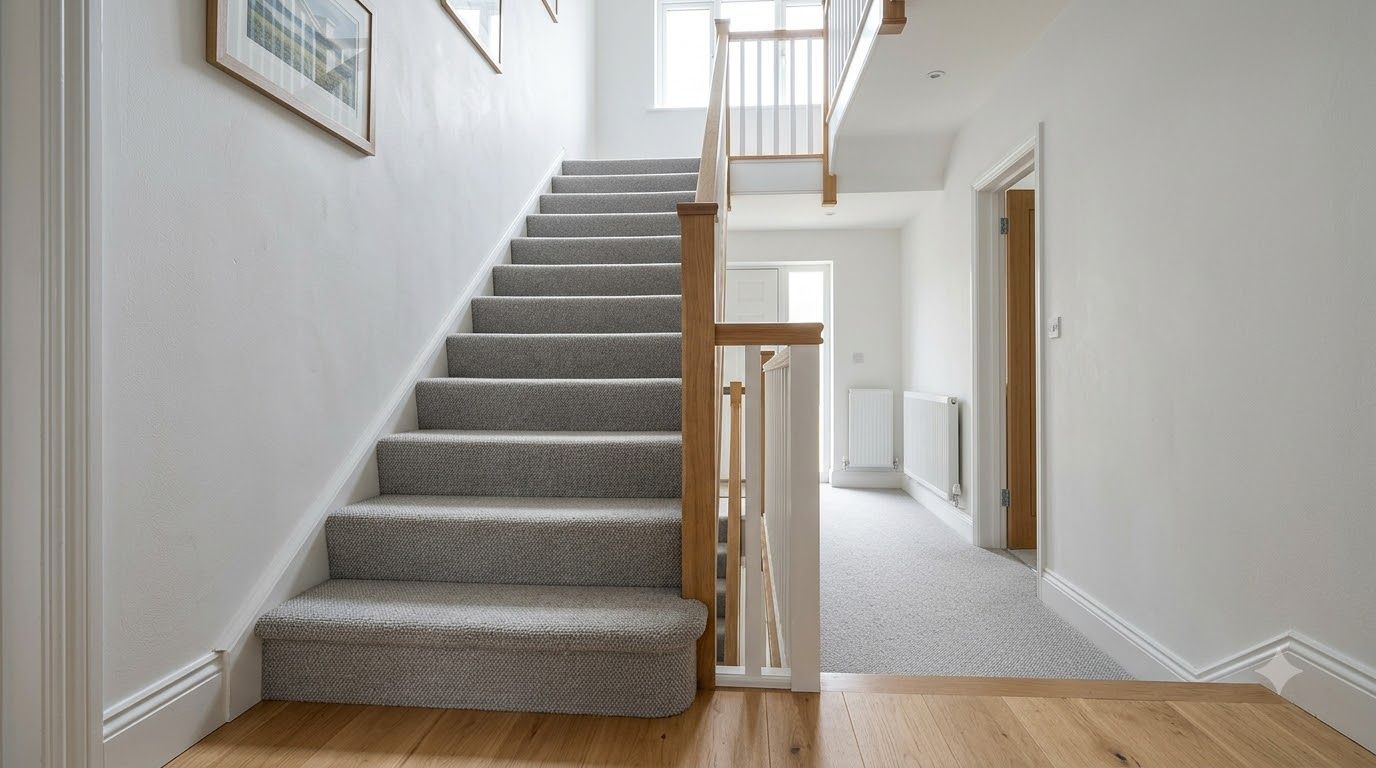
FULL WRAPS
Full Staircase Carpet Installation
Treads and risers covered from top to bottom in one continuous run of carpet. We fasten each tread separately, pull the riser tight into the joint, and keep the nosing crisp so the line down the flight stays straight.
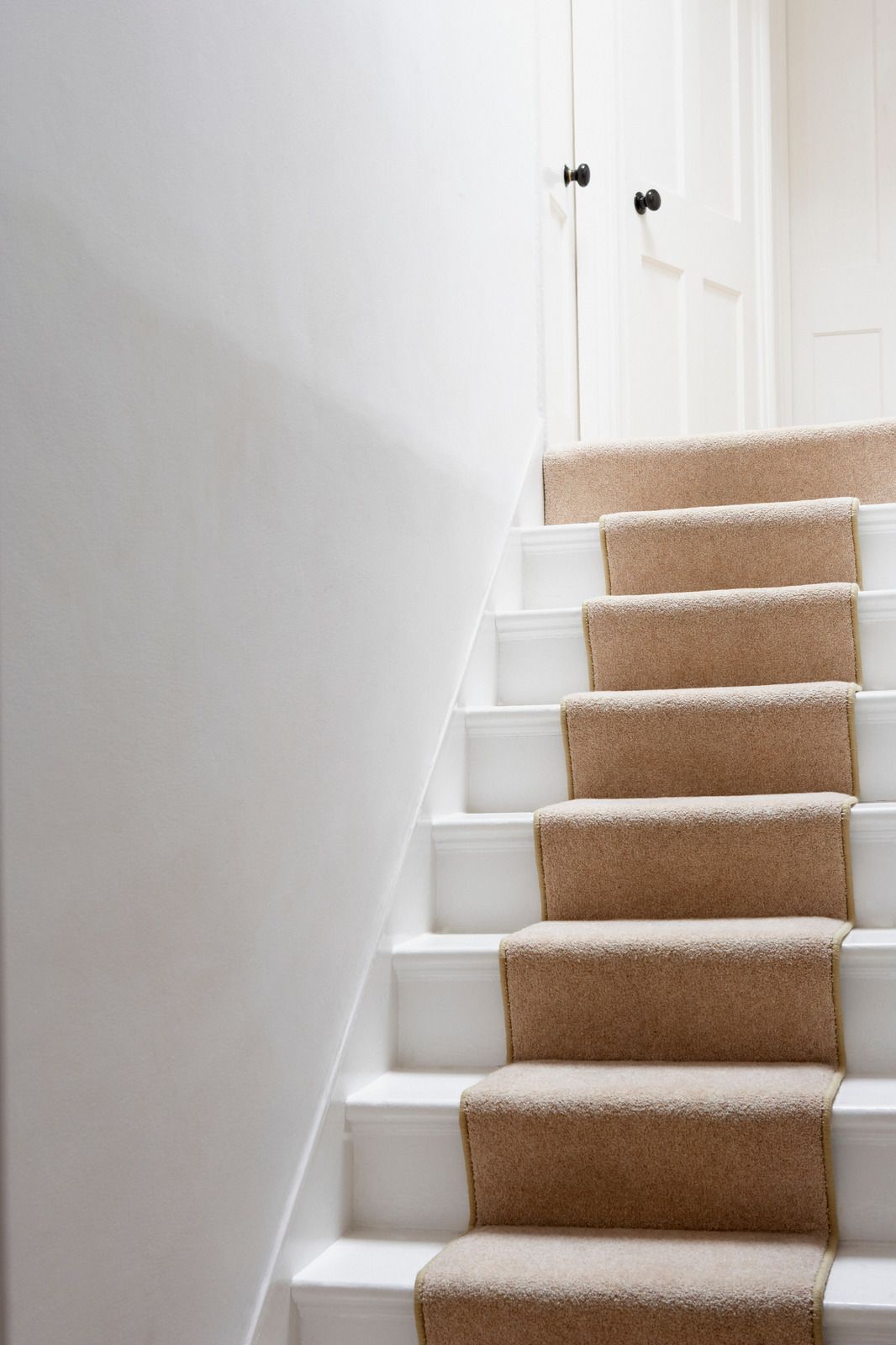
RUNNERS
Stair Runner Installation
A centered band of carpet with finished edges and exposed wood on either side. We measure the reveal to be equal on both sides, square the runner to the treads, and hold it down without visible hardware.
LANDINGS
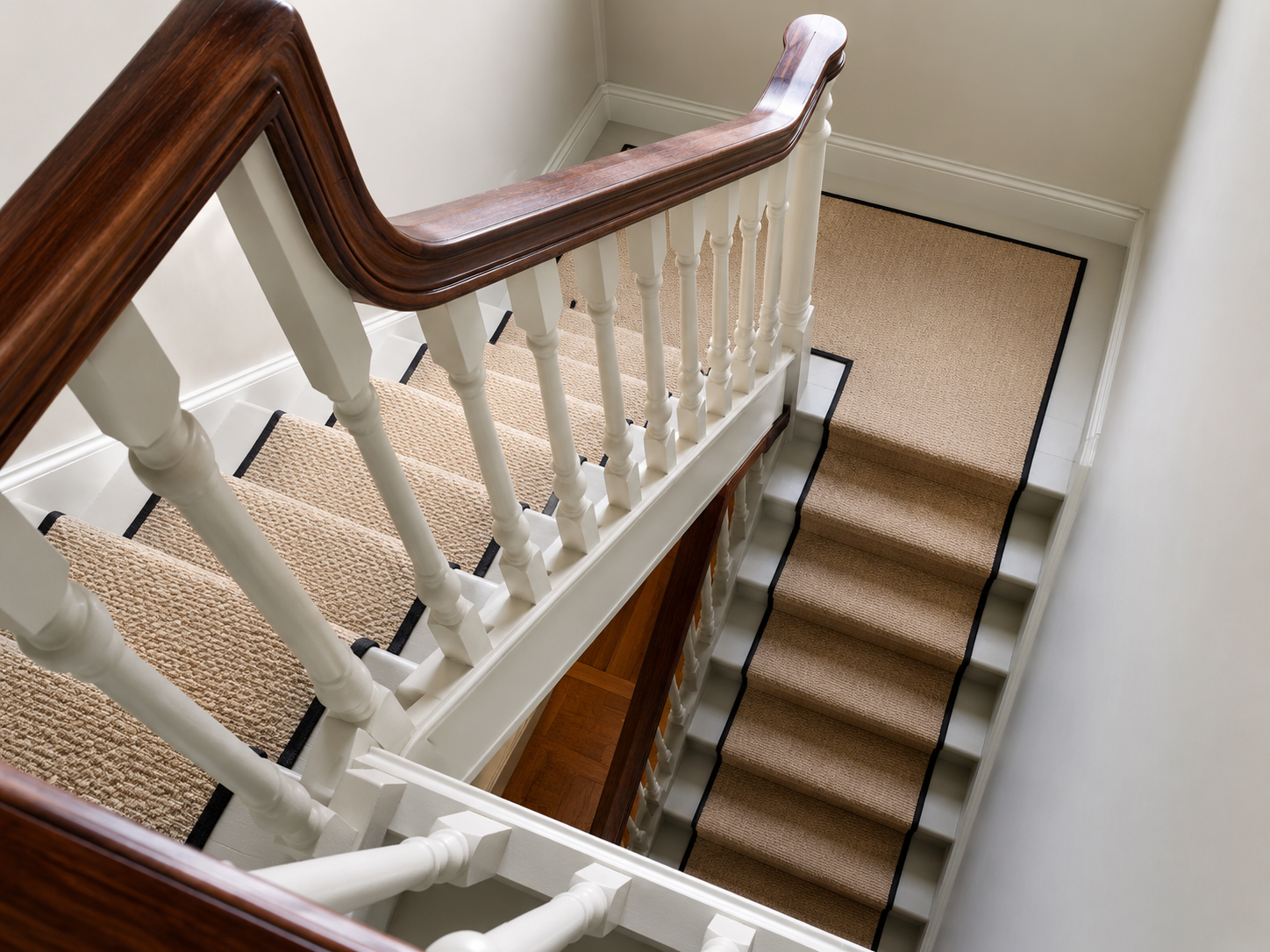
Landing and Half-Landing Carpet
Landings interrupt the pile direction and are where mismatches show first. We plan the carpet so the pile runs consistently through the turn, and we seam the landing where the eye is least likely to catch it.
OPEN SIDES
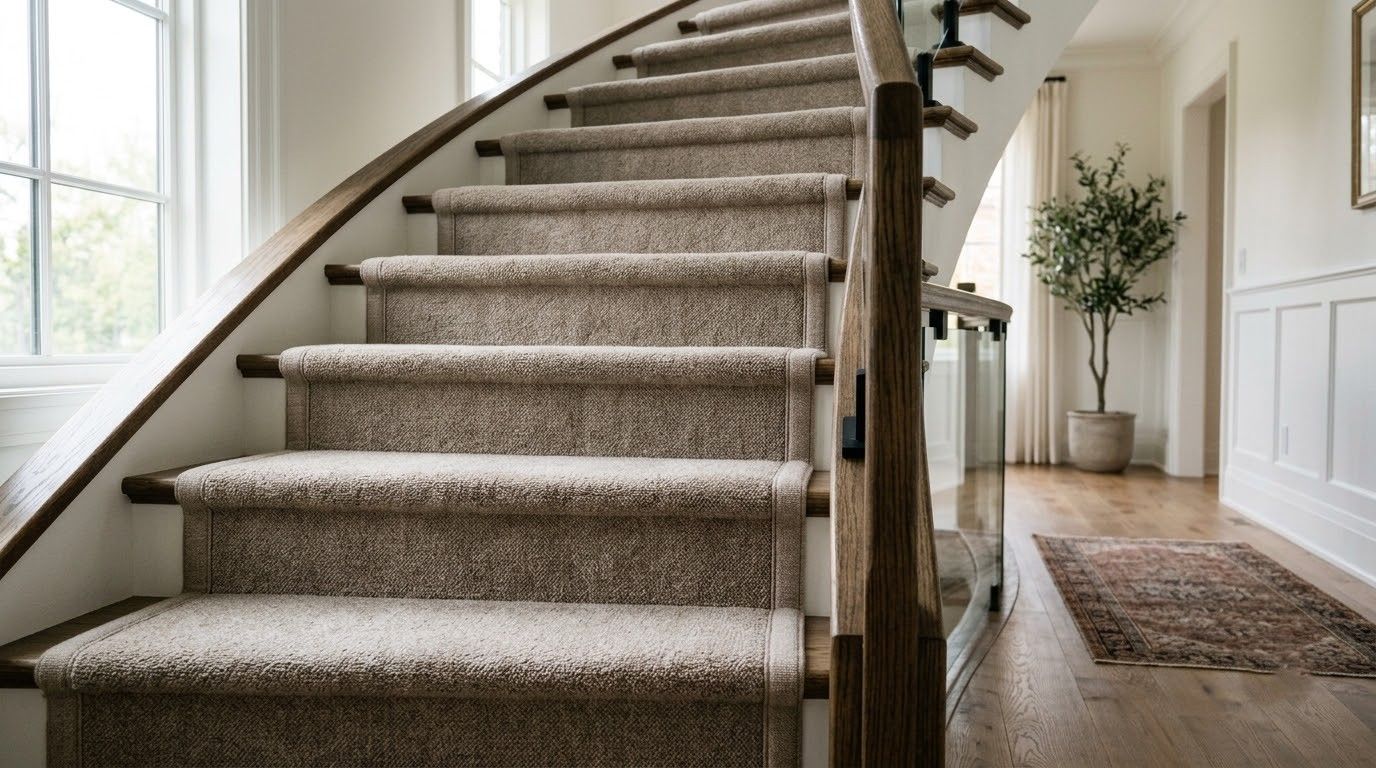
Open Side and Cap and Band Stairs
Where a staircase has a finished outer edge, the carpet has to wrap and return neatly around it. Cap and band wrapping gives that edge a tailored finish rather than the loose drape a waterfall leaves.
TREAD REPAIR
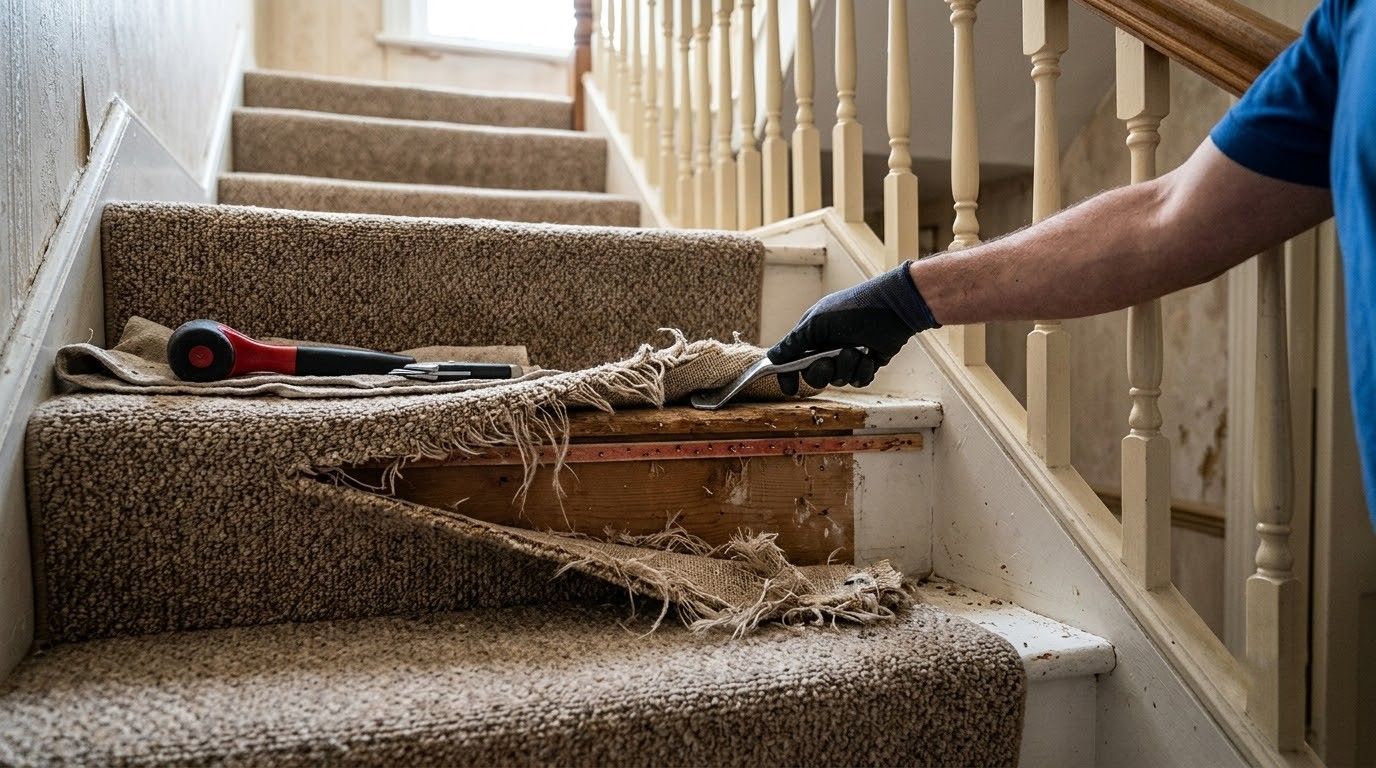
Stair Tread Repair and Retacking
Loose treads, frayed nosings, and carpet pulling away at the stringer get taken back to sound material and refastened. Worn front edges are the usual culprit, and rewrapping a few steps often saves the whole flight.
BASEMENT STAIRS
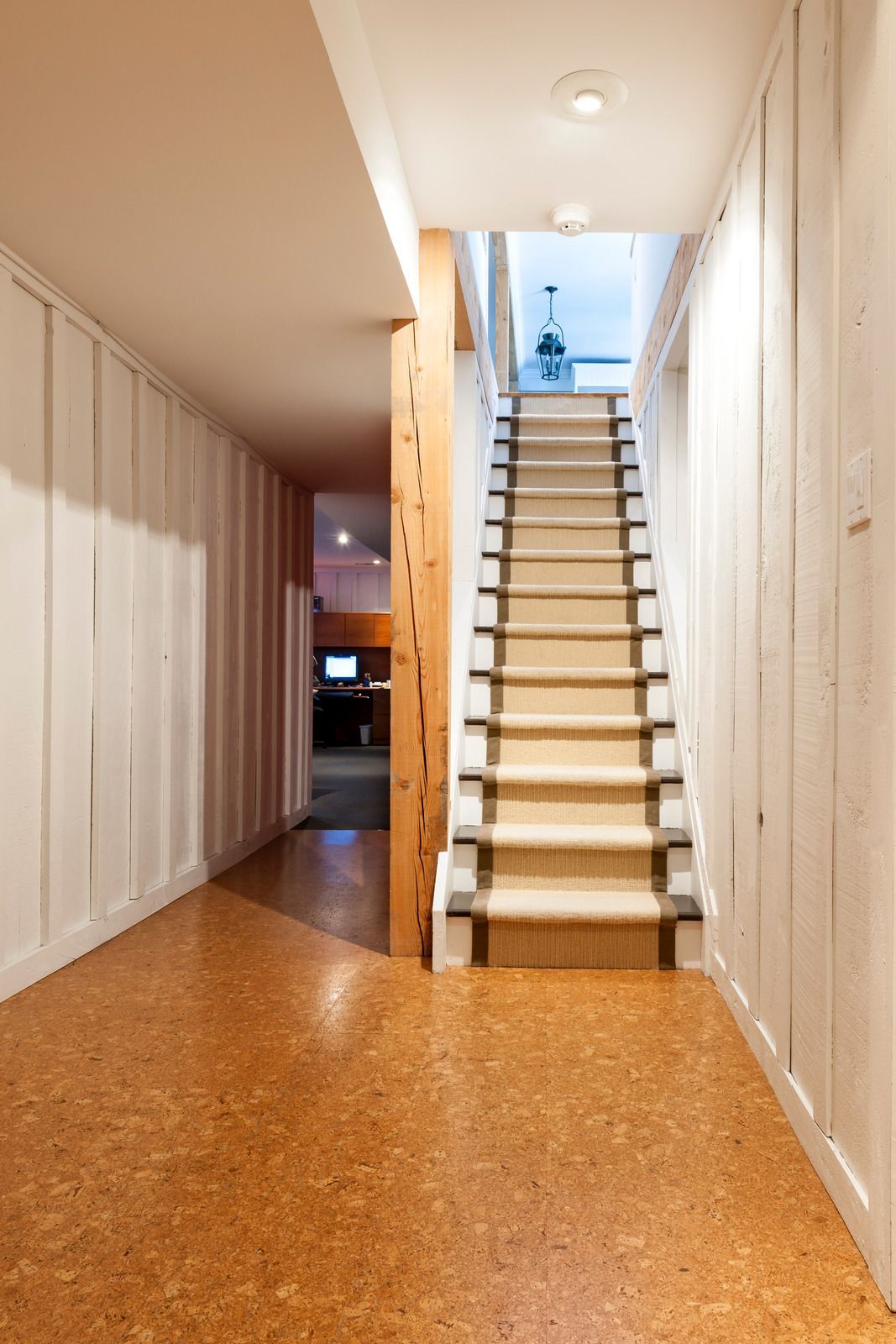
Basement and Utility Staircases
The flight down to a finished basement gets the least design attention and the most rough use. We fit durable, low-pile constructions there, and handle the concrete landing at the bottom where it meets the floor.
THE WORD ON OUR WORK
WHAT OUR CLIENTS SAY.
Stairs are where our customers tend to notice the difference in finish work, and it comes up repeatedly in what they write. Read through their comments and see whether the details they keep mentioning match what your own staircase needs.
Common Questions
FREQUENTLY ASKED QUESTIONS.
Questions that come up on nearly every staircase we quote, answered directly. If your stairs have an unusual turn or an open side, describe it on our contact page.
What is the difference between waterfall and Hollywood stair carpet?
Waterfall runs the carpet straight off the nosing to the next tread, leaving a soft curve. Hollywood, also called cap and band, wraps and fastens under the nosing for a tailored, defined edge.
How much carpet do I need for stairs?
Roughly 1.5 feet of length per standard step once tread and riser are combined, plus extra for landings and pattern matching. Winders and open sides always require more than they appear to.
What type of carpet is best for stairs?
Low, dense, tightly twisted cut pile in nylon or triexta. Avoid long shag and large loops: shag crushes on the nosing, and loops catch on claws and can run down the whole flight.
Can you carpet just the stairs and not the landing?
Yes, though the transition needs planning so the join at the top or bottom looks intentional. Many homeowners carpet the flight and leave a wood landing, and that reads well when the edges are finished properly.
Do stair runners need a pad underneath?
Pad is strongly recommended. It cushions each footfall, protects the runner from wearing through at the nosing, and adds grip. Stair pad is cut narrower than the runner so it stays hidden.
Why does carpet on stairs wear out faster?
All the load lands on the front 2 inches of each tread rather than spreading across a room. That concentrated abrasion, plus the constant flex over the nosing, wears fiber several times faster.
Can carpet be installed over hardwood stairs?
Yes. Tack strip fastens to the tread and riser without harming the timber underneath in any meaningful way, and the wood stays protected. Many homeowners carpet stairs for grip and uncover them again later.
How long does stair carpet installation take?
A standard straight flight of 13 to 15 steps usually takes 3 to 5 hours. Winders, open sides, landings, and pattern matching add time, since each of those steps is templated individually.
HOW WE WORK
FROM BOTTOM STEP TO TOP LANDING, HERE IS HOW.
STEP 01
WE MEASURE EVERY TREAD
Each step gets measured rather than multiplied from one sample, because riser heights and tread depths drift across a flight. Winders, open sides, and landings are templated separately so the yardage is right.
STEP 02
WE CHOOSE THE WRAP STYLE
Waterfall or cap and band, full wrap or centered runner. We show you what each looks like on your particular nosing profile, and explain how the choice affects wear at the front edge.
STEP 03
WE PRICE THE FLIGHT IN WRITING
Yardage, pad, labor, and any repair work appear as written figures before we start. Stairs cost more per square foot than rooms do, and we explain exactly where that extra labor goes.
STEP 04
WE STRIP AND PREPARE
Old carpet, staples, and tack strip come off, and every tread is checked for squeaks and loose nosings. Anything that moves gets screwed down, because a solid substrate is what keeps the wrap tight.
STEP 05
WE WRAP AND FASTEN
Pad is cut and stapled to each tread, then carpet is stretched over the nosing and anchored into the joint. Each step is finished completely before the next one is started.
STEP 06
WE CHECK EVERY STEP
We walk the flight tread by tread, press each nosing, square the pattern by eye from the bottom, and trim any stray fiber. Then the offcuts and staples leave with us.
Get Your Free Estimate
A STAIRCASE MEASURED STEP BY STEP, FREE.
Send us the number of steps, whether there is a landing or an open side, and we will come look. You get real yardage and a firm figure, with no obligation attached to any of it.
WHAT YOUR STAIR QUOTE COVERS:
- Tread by tread measurements
- Waterfall or cap and band options
- Pad specification for stairs
- Landing and winder allowances
- Removal of old stair carpet
- Written pricing before work begins